
Marketing has changed a lot with the rise of social media. Earlier, brands mainly depended on television, newspapers, radio, hoardings, magazines, and other traditional advertising channels to reach people. Today, customers spend a large part of their time on social platforms, where memes, short videos, creators, and trending conversations get attention every day. This change has created a new marketing option for businesses: meme marketing.
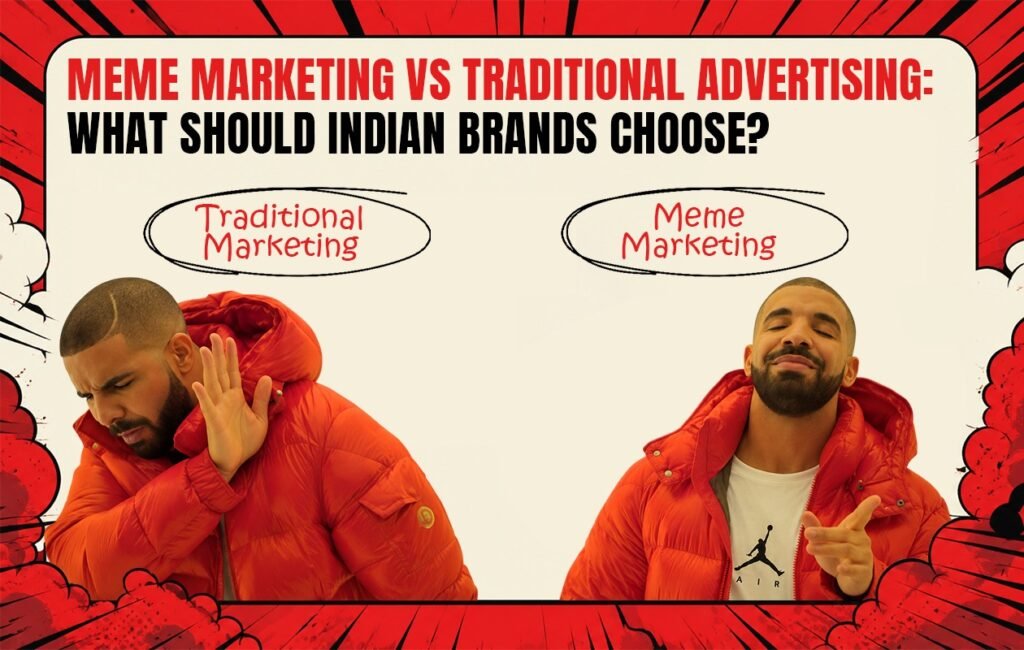
Memes are no longer only used for entertainment. Brands are using relatable jokes, trending formats, pop-culture moments, and online conversations to connect with audiences. This brings us to an important question: Meme Marketing vs Traditional Advertising : what should Indian brands choose?
The answer depends on what a brand wants to achieve. Both methods have their own place in marketing, and working with a meme marketing agency can help businesses choose the right approach for their campaigns.
What Is Meme Marketing?
Meme marketing is a digital marketing approach where brands use memes, popular formats, trending topics, humour, and relatable situations to communicate with their target audience.
Instead of presenting a direct sales message, what is meme marketing can be understood through how a meme makes the brand part of a conversation that people are already enjoying online. When the content feels natural, people are more likely to like it, share it, tag friends, or comment on it.
But meme marketing is not simply about adding a logo to a popular meme. Good campaigns require an understanding of trends, audience interests, timing, humour, platform behaviour, and brand tone.
What Is Traditional Advertising?
Traditional advertising refers to established marketing channels such as television, radio, newspapers, magazines, billboards, posters, and print advertisements.
These formats have been used by brands for decades to create awareness and communicate product or service messages to large groups of people.
Traditional advertising gives brands considerable control over the message, placement, design, and timing of an advertisement. It can be useful when a company wants visibility across a particular location or a large offline audience.
Meme Marketing vs Traditional Advertising: Key Differences
The biggest difference between these two approaches is how they communicate with audiences.
| Factor | Meme Marketing | Traditional Advertising |
| Communication | Casual and conversational | Direct and promotional |
| Audience Response | Likes, comments, shares and tags | Usually limited interaction |
| Content | Humorous, relatable and trend-based | Structured and brand-focused |
| Distribution | Mainly social media and online communities | TV, print, radio, outdoor and other offline channels |
| Speed | Can be created and published quickly | Usually needs more planning |
| Shareability | Strong potential for sharing | Generally depends on paid exposure |
| Target Audience | Can focus on online communities and interests | Often based on channel, location and media audience |
Neither format works in exactly the same way. The right option depends on the audience, campaign goal, budget, industry, and type of message a brand wants to communicate.
Why Meme Marketing Is Getting Attention in India
India has a huge digital audience that spends time across Instagram, YouTube, Facebook, X, and other social platforms. People also consume content in different languages and connect with communities based on entertainment, cricket, movies, gaming, food, fashion, technology, and many other interests.
This makes memes a useful format for brands. Instead of asking audiences to stop and watch an advertisement, brands can create content that fits into the type of content people are already consuming.
For startups, D2C companies, entertainment brands, apps, food businesses, and youth-focused companies, memes can offer a simple way to make their online communication more relatable.
1. Meme Marketing Can Give Brands a More Human Voice
Traditional advertisements often follow a planned brand message. Meme content can feel more casual.
A brand can use a funny everyday situation, a trending dialogue, or a familiar internet reference to communicate an idea without making the content feel like a typical advertisement.
This can help brands develop a personality on social media.
For example, instead of simply telling people that a product is useful, a brand can show a relatable situation where the product becomes part of the joke. The audience gets entertainment while also seeing the brand message.
2. Traditional Advertising Still Matters
The rise of memes does not mean traditional advertising has disappeared.
Television can still provide large-scale visibility. Billboards can put a brand in front of people in busy locations. Newspapers and magazines can reach specific audiences, while radio can be useful for local and regional communication.
Traditional advertising can also be useful for campaigns where the brand needs a controlled and clearly defined message.
The point is not to completely replace traditional advertising. Instead, brands need to understand when each method makes sense.
3. Memes Can Turn Viewers Into Participants
Traditional advertising usually sends a message from the brand to the audience. Social media allows people to respond immediately.
A meme can receive comments, shares, tags, remixes, reactions, and even new memes based on the original content. This creates more opportunities for people to interact with the campaign.
When audiences participate, the content can travel beyond the original post and reach people through their own social circles.
4. Views Alone Do Not Define Campaign Success
A large number of views may look impressive, but views are only one part of a campaign.
A brand also needs to consider whether people remember the company, understand the message, visit the website, engage with the content, or develop interest in the product.
This is especially important with meme marketing. A meme may become popular because it is funny, but if people cannot remember which brand posted it, the campaign may not achieve its larger marketing purpose.
Good meme marketing connects the joke with the brand in a natural way.
5. Meme Marketing Can Work Alongside Influencer Marketing
Brands do not have to use meme marketing as a standalone strategy. Meme pages, creators, influencers, and other social communities can be used together as part of a larger digital campaign.
Memes can help attract attention, while influencers can add a personal voice to the campaign. Using both approaches can help a brand communicate with different parts of its online audience.
This is especially useful for product launches, entertainment campaigns, seasonal campaigns, and social media awareness campaigns.
When Should Indian Brands Consider Meme Marketing?
Meme marketing can be useful for brands that want to:
- Increase social media engagement
- Build online brand awareness
- Reach younger digital audiences
- Join relevant online conversations
- Create shareable content
- Give their brand a fun social media personality
- Support a new product or campaign
- Increase visibility across meme communities
However, brands should not jump on every trending topic.
A trend may be popular but still not match the brand’s audience or image. The content should make sense for the company and should not feel forced.
Meme Marketing for Entertainment and Trending Industries
Meme marketing has a natural connection with industries that already generate conversations online.
Movies can use popular scenes and characters to create buzz around a release. Music campaigns can use lyrics, moments, and trending sounds. Podcasts can turn interesting conversations into social content. Sports brands can build campaigns around moments that fans are already discussing.
This gives entertainment and consumer brands many opportunities to become part of existing online conversations.
Is Meme Marketing More Affordable Than Traditional Advertising?
Cost depends on the type of campaign.
Traditional advertising expenses can include production, media placement, location, duration, and distribution. A television commercial, billboard campaign, or print advertisement can have very different costs depending on the execution.
Meme marketing can start with a smaller digital campaign, but professional meme campaigns may include creative development, meme-page placements, influencer partnerships, distribution, campaign management, and paid promotion.
Therefore, brands should not compare only the starting cost. It is more useful to consider what the campaign is expected to achieve and which channel can support that goal.
Should Brands Choose Meme Marketing or Traditional Advertising?
The Meme Marketing vs Traditional Advertising debate does not have one answer for every brand.
A business looking for offline visibility may benefit from television, outdoor advertising, print, or radio. A brand trying to create online conversations may find meme marketing more relevant.
Many brands can also use both. For example, a traditional campaign can introduce a product to a broad audience, while meme content can keep the conversation active on social media. This allows the two approaches to support different parts of the customer journey.
The important thing is to match the marketing channel with the campaign objective instead of choosing a format simply because it is trending.
Why Brands Work With Meme Marketing Agencies
Creating a meme takes only a few minutes. Creating a meme campaign that fits a brand, reaches the right audience, follows current trends, and supports a marketing goal requires much more planning.
A professional meme marketing agency can help brands with trend research, campaign ideas, creative development, meme-page distribution, audience targeting, content planning, and campaign tracking.
The agency’s role is not just to make funny posts. It is to understand what the audience is talking about and find ways for the brand to enter that conversation naturally.
Final Thoughts
The Meme Marketing vs Traditional Advertising discussion is not about completely replacing one method with another.
Traditional advertising continues to offer brands structured communication and broad offline visibility. Meme marketing brings a more social, relatable, and interactive approach to digital communication.
For Indian brands, the right choice depends on the audience, campaign objective, industry, budget, and message.
Brands that understand these differences can use each channel where it makes the most sense. And when planned properly, meme marketing can become more than just a way to make people laugh, it can become a useful part of a brand’s larger digital strategy.
Frequently Asked Questions
Q1. Is meme marketing better than traditional advertising?
Ans: Neither approach is suitable for every campaign. Meme marketing can be useful for social engagement, online conversations, and shareable content, while traditional advertising can help with broad awareness and offline visibility.
Q2. Why is meme marketing becoming popular in India?
Ans: India has a large and active social media audience that regularly consumes memes, short videos, trends, and relatable content. This gives brands an opportunity to communicate through formats people already enjoy.
Q3. Can startups use meme marketing?
Ans: Yes. Startups can use memes to introduce their brand, create awareness, develop a social media personality, and interact with audiences without relying only on conventional advertisements.
Q4. Can meme marketing and traditional advertising work together?
Ans: Yes. Brands can use traditional advertising for broad awareness and meme marketing to build online interaction and keep the conversation going on social media.
Q5. Does meme marketing work for every industry?
Ans: Meme marketing can be adapted for many industries, but the content needs to match the brand and audience. A meme should feel relevant rather than forced.
Q6. How can a brand start meme marketing?
Ans: A brand can begin by identifying its audience, setting a clear campaign goal, researching relevant trends, creating suitable content, selecting the right distribution channels, and tracking campaign results.
Q7. What makes a meme marketing campaign successful?
Ans: Strong campaigns usually combine relevant ideas, good timing, audience understanding, brand connection, creative execution, and effective distribution. Going viral can help, but the content should also support the brand’s actual marketing goal.